
What Is Shadow Boxing? Purpose and Beginner Practice
Shadow boxing is non-contact practice against an imagined opponent. Learn what it helps with, its limits, and a simple way to start for MMA.
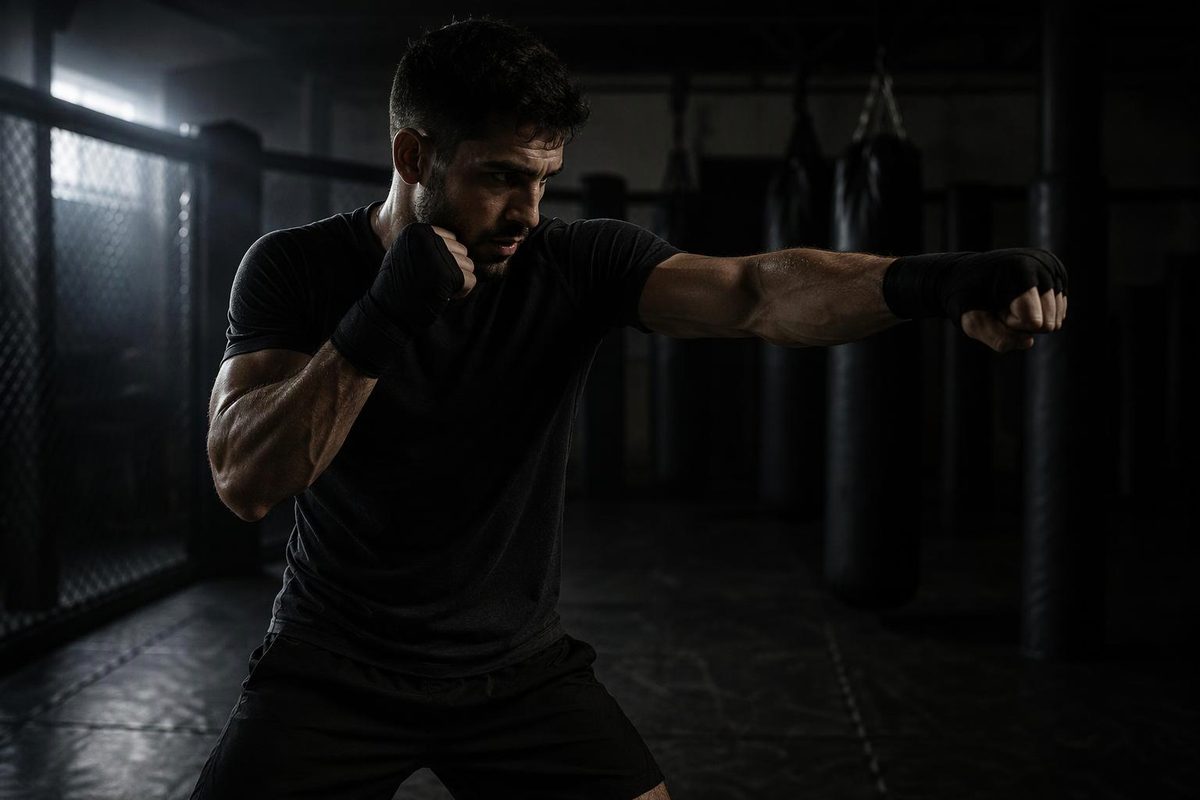
Shadow boxing is practicing strikes, defense and movement without hitting a bag or another person. You move as though an opponent is in front of you: throw a punch, return to guard, respond to an imagined attack and change position. You do not need an actual shadow, a mirror or special equipment. Boxing coach Fran Sands describes it simply as boxing without a physical opponent present.
For an MMA beginner, it is a way to rehearse what your coach has taught you without the pressure of someone trying to hit you. The goal is purposeful practice—not throwing as many punches as possible.
What is shadow boxing for?
A useful round gives you something specific to work on:
- Technique: Slow down a movement and check one detail, such as whether your punching hand returns to guard.
- Coordination: Link a strike, a defensive action and a step instead of practicing each in isolation.
- Balance: Check whether you can finish a punch without falling forward or needing a recovery step.
- Visualization: Imagine where the opponent is, what you are aiming at and what they might throw back.
Expert Boxing’s guide recommends choosing a goal, working on limited technique details and getting feedback from a coach, mirror or camera. Repeating a movement is most useful when you know what you are trying to correct.
Shadow boxing can also be used as part of a warm-up or a harder conditioning session. For a new recreational student, keep those purposes separate: a technical round should not become a race that makes your form fall apart.
How it differs from bag work and sparring
In shadow boxing, there is nothing to hit and no real opponent to react to. Bag work gives you a physical target; sparring adds another person’s decisions, timing and pressure.
That makes shadow boxing useful, but limited. An imagined opponent cannot surprise you or show whether your defense actually works. Expert Boxing notes this predictability: reacting to a real opponent is harder because you must adjust on the fly. Treat solo practice as preparation for coached drills—not proof that you are ready for harder sparring.
A simple way to start
Try this short practice using only movements you have already learned. These timings are a starting option, not a required training standard.
Set up: Clear enough space to extend your arms and step in each direction without hitting furniture or people. Use a stable, non-slip surface. Start empty-handed; you do not need gloves or dumbbells. Take the stance your coach uses for MMA. The beginner boxing stance guide explains the basic setup; let your coach guide any MMA adjustments.
Do three one-minute rounds, resting 30–60 seconds between them:
- One punch, one check. Throw a relaxed jab—the lead-hand straight punch—toward an imagined target. Return to guard and reset. Check that you are not reaching so far that you lose balance.
- Add movement. Use the same jab, then take a small step and settle back into your stance. Keep the pace slow enough to notice where your feet finish.
- Add an opponent. Imagine their straight punch coming back. Use one defensive action your coach has taught you, then move away and reset. If you have not learned a defense yet, repeat round two rather than inventing one.
Keep your shoulders relaxed, breathe throughout and keep the movements controlled. Stop if a movement hurts.
Checkpoint: Occasionally pause after a sequence. Are you balanced, with your hands back in guard and your eyes forward? If not, simplify the sequence or slow down. A mirror or short recording can help you notice mistakes; a coach can tell you how to fix them.
How it fits MMA training
MMA solo practice can combine shadowboxing with kicks and shadow wrestling—rehearsing wrestling movements without a partner. Evolve MMA’s guide covers these options and highlights maintaining balance when a strike makes no contact. You do not need to include everything immediately. Add only techniques your coach has shown you, with enough room and an appropriate surface.
For training around a day job, use a few easy rounds to revisit a class correction rather than automatically adding another exhausting workout. Bring one question back to your coach—for example, “Am I leaning forward after my jab?” That gives your next solo practice a clear purpose.