
4 Boxing Combos to Learn Before Longer Punch Sequences
Learn four beginner boxing combos, with punch numbers, transition cues, range checks and a controlled progression from shadowboxing to pad drills.
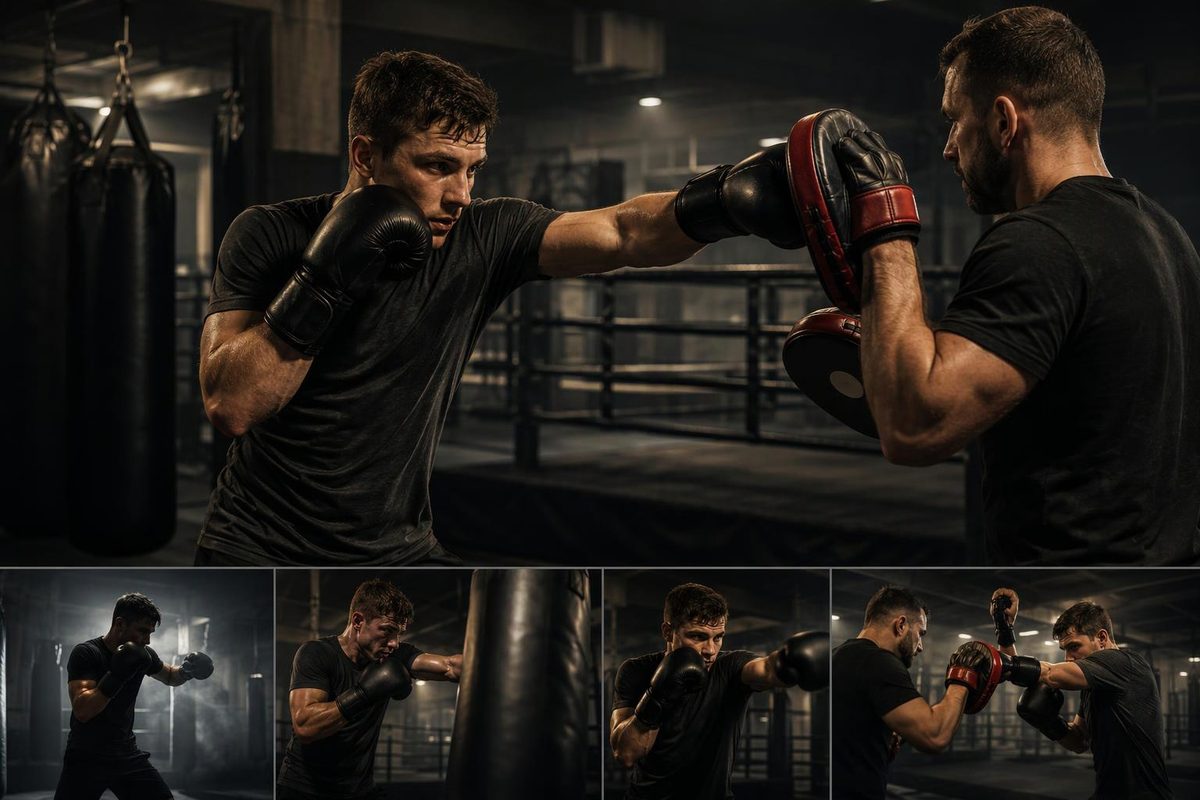
Start with jab–cross, double jab–cross, jab–cross–jab and jab–cross–lead hook. These give you a small set to practice linking punches without turning every repetition into a memory test.
The aim is not simply to finish the sequence. It is to finish balanced, with your guard recovered and your feet ready to move. England Boxing’s coaching handbook recommends simple two- or three-punch combinations for beginners, at the appropriate range, before adding complexity.
Read the numbers first
For the combinations below:
- 1 = jab: straight punch with your lead hand.
- 2 = cross: straight punch with your rear hand.
- 3 = lead hook: curved punch with your lead hand.
In orthodox stance, your left hand leads; in southpaw, your right hand leads. The sequences stay the same—mirror the hands. Confirm your gym’s numbering with your coach.
You should already be able to throw each punch separately. If not, start with the basic boxing punches, rather than trying to fix several unfamiliar movements at once.
Four boxing combos to learn
These sequences appear in Evolve MMA’s basic combination guide. Treat them as practice patterns, not promises that a particular punch will land.
1. Jab–cross: 1–2
Practice purpose: link your lead and rear hands at straight-punch range.
Throw the jab from your guard. As it retracts, rotate your rear hip and shoulder into the cross, allowing the rear foot to turn on its ball. Recover the cross to your guard rather than leaving it extended. These mechanics follow England Boxing’s straight-punch guidance.
The transition should feel connected, not like two separate punches with a complete pause between them. Start slowly enough to keep the lead hand protecting your face as the cross travels.
Checkpoint: after the cross, can you take a small step back without first catching your balance? If you need to stumble or pull your body upright, shorten the reach and reduce the effort.
2. Double jab–cross: 1–1–2
Practice purpose: repeat the lead hand cleanly before switching sides.
Throw the first jab, retract it toward guard, then send the second jab along the same path. Follow with the cross. Do not leave the first jab hanging out and turn the second into a little push.
Begin with your feet stationary. Add a small advance only after a coach has checked how you step with the jabs; avoid chasing the target by stretching your upper body forward.
Checkpoint: both jabs should be recognisable punches. During the cross, your rear heel can rise as you pivot, but the ball of the foot should retain contact with the floor. If the second jab becomes rushed or incomplete, slow the entire sequence.
3. Jab–cross–jab: 1–2–1
Practice purpose: return to a straight lead-hand punch after the cross.
Throw your 1–2, then recover the rear hand as you send the final jab. Let your body return from the cross’s rotation without winding up or making an exaggerated twist.
Keep all three punches at a distance where you can reach without leaning. In a drill, reset after the last jab. Do not assume that throwing it automatically makes you safe to move away.
Checkpoint: the final jab should be as controlled as the first—not a hurried extra punch thrown while your rear glove drops.
4. Jab–cross–lead hook: 1–2–3
Practice purpose: connect straight punches to a different punching angle.
Throw the jab and cross, then use the return rotation of your hips and torso to deliver the lead hook. Keep the rear glove at your face. Bring the hook from where your lead hand is, rather than pulling it back to load up.
Range is the main complication: a compact hook has less reach than a fully extended straight punch. On pads, have your coach set a reachable hook target. If the target moves away, do not straighten your arm into a wide swing just to complete the sequence.
England Boxing’s hook guidance stresses avoiding a drawn-back preparation, excessive rotation and failure to return to guard.
Checkpoint: finish facing the target with your stance intact, not spun past it.
Practice the connection, then the decision
Pick one combination per practice block. Use this progression as a simple training suggestion, not a readiness test for sparring:
- Shadowbox five slow repetitions. Reset between attempts. Check hand recovery and balance before adding speed.
- Add an exit. Repeat the combo, recover your guard, then take a small step back or a coach-taught angle step. The exit belongs to the repetition.
- Use pads or a bag at light effort. Wear wraps and suitable gloves, and have a coach check your technique. If the target is no longer reachable, reset rather than lunging to finish.
- Add a coach-led decision drill. For example, the pad holder sometimes offers only the jab target and sometimes the full 1–2. Learn to stop when the next target is unavailable instead of completing the pattern automatically.
This reflects the handbook’s progression from basic technique toward movement, selection and application under pressure. It also warns against overcommitting mid-combination and failing to adjust the feet when an opponent changes position.
For recreational MMA, ask your coach to choose exits that leave you ready to defend kicks, a clinch entry or a takedown—not just another punch. Keep early practice non-contact or on equipment; remembering a combo is not a reason to begin hard sparring. When fatigue starts breaking the transitions, end the block rather than adding more punches.