
What to Expect When You Start Grappling for Submissions
Positions, first-class structure and safety basics come first; clothing, scoring, legal submissions and match length vary by academy and event.
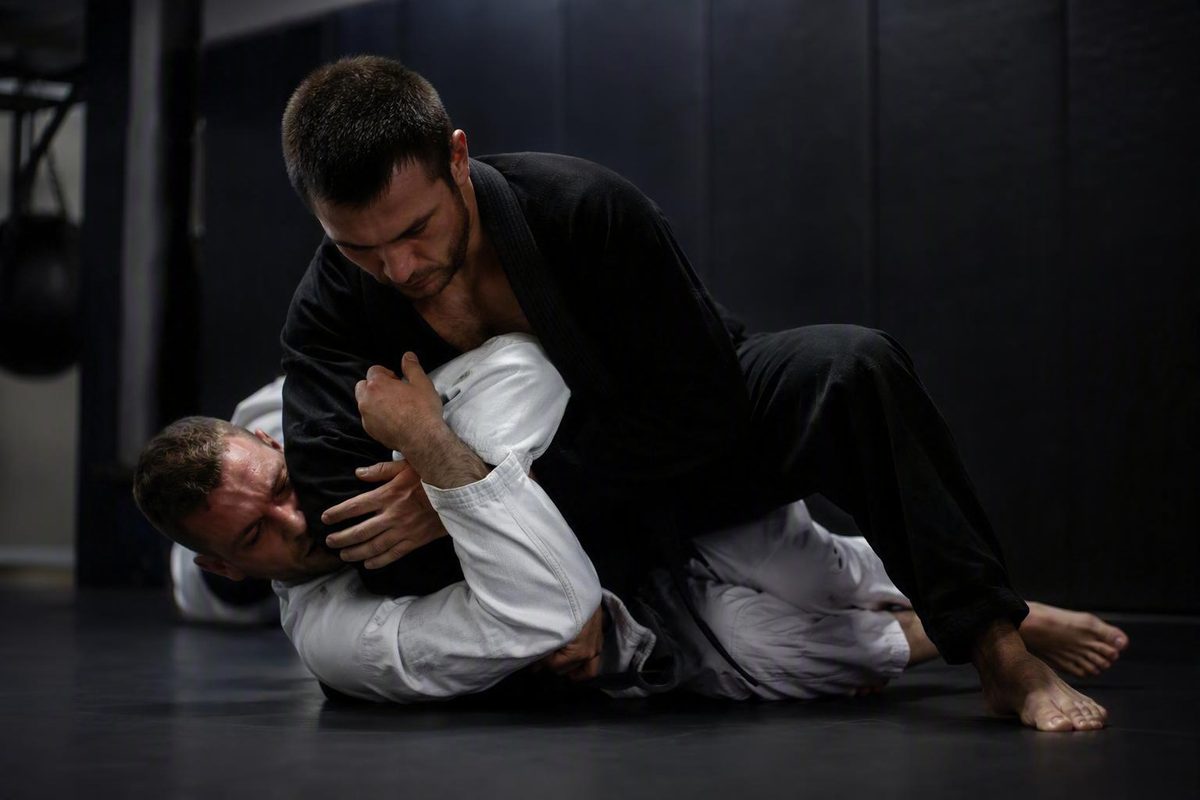
Submission grappling can initially look like a scramble of takedowns, tangled limbs, reversals, and sudden taps. Once you understand its positional logic, the action becomes easier to follow. Each athlete is trying to control the other person, improve position, escape danger, or create an opportunity to apply a choke or joint lock.
The important qualification is that submission grappling is not one globally standardized sport. It is a family of related grappling practices. Terminology, clothing, scoring, legal submissions, match length, and ranking structures can differ between academies and competition organizers.
For a beginner, that variation makes two priorities especially useful. First, learn the common positional map: guard, side control, mount, back control, turtle, and the major transitions between them. Second, learn the safety conventions—especially when to tap, when to release, and how to control intensity—before trying to collect finishing techniques.
Related: First Month of MMA Training: What to Expect.
What submission grappling is—and what the name does not settle
A practical working definition is that submission grappling is a full-contact grappling activity centered on takedowns, positional control, ground fighting, escapes, transitions, chokes, and joint locks. The goal is often to make an opponent submit, but the route to that goal depends on the rules and the situation.
“Submission grappling” and “submission wrestling” are commonly used as overlapping terms. You may also hear “sport grappling,” “submission fighting,” or simply “grappling.” None of those labels guarantees a particular scoring system, uniform, legal-technique list, or class curriculum. A broad overview of submission-wrestling terminology likewise describes substantial variation between organizations and associated styles.
No-gi Brazilian jiu-jitsu overlaps heavily with submission grappling. Both can involve takedowns, guard work, passing, positional control, chokes, arm locks, and leg locks. In everyday gym conversation, some people use “no-gi BJJ” and “submission grappling” interchangeably.
Other coaches use the terms more narrowly. For them, no-gi BJJ means Brazilian jiu-jitsu practiced without the traditional uniform, while submission grappling describes a broader technical blend that may incorporate more explicit wrestling, judo, sambo, catch-wrestling, or luta-livre influences. Neither convention controls how every school uses the label.
No-gi is the format most commonly associated with submission wrestling. Athletes typically wear close-fitting athletic tops and shorts rather than a jacket and belt. But that association is not absolute. Submission Challenge, for example, advertises both gi and no-gi divisions, showing that the phrase “submission grappling” does not settle the clothing question.
Nor does the label settle every question about strikes. Broader uses of “submission fighting,” however, can refer to formats with different permissions. Instead of assuming the name guarantees a non-striking environment, ask the academy what its classes include and check the rules before entering an event.
The most useful mental model is therefore not “one style with one rulebook.” Think of submission grappling as a related group of practices organized around a common problem:
- Establish contact and manage distance.
- Take the opponent down or enter a workable position.
- Control movement while protecting yourself.
- Advance, reverse, or escape.
- Apply a submission when the position supports it.
That framework remains useful even when the clothing, scoring system, or preferred techniques change.
The game from takedown to tap
From standing, athletes establish contact through hand fighting, ties, grips, or clinch positions. Each person may be looking for a takedown, a route behind the opponent, or a controlled transition to the floor.
Once the action reaches the ground, the immediate task is usually not to grab the nearest limb. The grappler must stabilize, understand the position, prevent an escape or counterattack, and decide whether to advance or submit. If the initial position is poor, the priority becomes defense and recovery.
The following vocabulary provides a basic map:
-
Takedown: Bringing an opponent from standing to the floor while establishing meaningful control. Rulesets differ over what must happen after contact and how long control must be demonstrated.
-
Guard pass: Moving around or through the bottom athlete’s leg-based defenses to establish a more dominant top position, commonly side control.
- Side control: A top position in which one grappler controls the other from across the torso rather than sitting directly over the hips.
- Mount: A position in which one grappler is on top of the opponent’s torso, usually with a leg on each side.
- Back control: Control from behind the opponent, often using leg positioning and upper-body connections to remain attached while threatening chokes.
- Turtle: A compact position in which a grappler is turned toward the floor, commonly on hands and knees or elbows and knees.
- Sweep: A reversal initiated from guard that brings the bottom grappler on top. Particular scoring systems may use a narrower technical definition.
- Reversal: A broader change in which the bottom athlete turns the situation over and becomes the top athlete. Not every reversal is scored as a sweep.
- Escape: Getting out of an inferior or dangerous position, often by recovering guard, returning to standing, or creating a neutral exchange.
- Positional control: Restricting an opponent’s useful movement while maintaining your own balance, alignment, and ability to respond.
These definitions explain why “top” and “bottom” are not complete judgments. Top position may offer gravity, mobility, and passing opportunities, but it is not automatically decisive. A top athlete trapped in a strong guard may be off-balance or under submission threat. Likewise, being on the bottom is not automatically losing if the athlete can control distance, sweep, stand, or attack.
The better questions are:
- Who controls the other person’s posture and movement?
- Who can improve position without becoming vulnerable?
- Who has credible escape or submission threats?
- Who is spending more effort simply to remain safe?
- What does the applicable ruleset reward?
This differs from pin-focused forms of wrestling. Under wrestling rules, exposing or holding an opponent’s back may produce points or end the contest through a fall. Submission grappling commonly allows the exchange to continue toward a choke or joint lock. That difference changes behavior: a grappler may accept a position that would be disastrous under pin rules because the submission-grappling format provides another route to escape or attack.
Still, submission grappling is not simply “wrestling plus submissions.” Guard work, submission threats, clothing rules, scoring, and acceptable transitions can reshape the entire match. A wrestler entering a submission-grappling class may have excellent takedowns and top pressure but still need to learn how posture, neck position, arm placement, and leg entanglements change the consequences of familiar movements.
Position creates the context for a submission. Back control explains why a rear naked choke may be available. Guard explains why the bottom athlete may threaten a triangle. Side control explains why an exposed arm or shoulder can become vulnerable. Without that context, a list of techniques is difficult to remember and even harder to apply safely.
That is why MMA Spark’s grappling approach is positions before submissions; survival before offense. It is an editorial training framework, not a universal scientific law, but it gives beginners a practical order for interpreting what happens during a round.
How submission-grappling matches are won
A submission is commonly communicated in one of two ways:
In training, tapping must end the exchange. Beginner guidance from ONE Jiu-Jitsu Academy likewise emphasizes tapping early, controlled sparring, suitable partners, and clear expectations about intensity rather than treating every round as a contest.
Depending on the rules, a referee may also stop the action when a competitor cannot intelligently defend, becomes unable to continue, or is judged to be in immediate danger. The precise threshold belongs to the applicable event rules rather than to a universal submission-grappling standard.
Not every match has to end in a tap. The two broad competitive models are points-based and submission-only competition.
In a points-based format, athletes may receive points for specified actions or positions. Depending on the organizer, examples can include:
- Takedowns
- Sweeps or designated reversals
- Guard passes
- Mount
- Back control
- Other defined dominant positions
If nobody submits before time expires, the score, penalties, advantages, referee criteria, or another tie-breaking procedure may determine the winner. The details vary widely enough that experience in one format does not guarantee familiarity with another.
In a submission-only format, regulation may omit conventional positional points and prioritize achieving a submission. That does not necessarily mean every bout continues indefinitely. If regulation ends without a submission, the organizer might use overtime, referee criteria, a draw, or another stated procedure.
Other possible outcomes include referee stoppage, disqualification, forfeit, or an overtime result. These are possibilities, not promises about every event.
Submission Challenge provides one concrete example of organizer-level variation. Its published tournament format and rules advertise submission-only regulation, double elimination, and EBI-style overtime beginning from either back control or a designated armbar position sometimes called “spiderweb.” The organizer lists adult regulation periods of six minutes for white belts and eight minutes for blue belt and above. Those are event-specific examples, not standard match lengths for submission grappling as a whole.
Rules affect tactics long before the result is declared.
Guard pulling is another variable. Competitors must check the current event rules rather than assuming that every organizer treats guard pulling the same way.
Before competing, verify:
- Regulation time
- Points, advantages, and penalties
- Overtime or tie-breaking procedure
- Guard-pulling rules
- Stalling or inactivity criteria
- Legal and prohibited submissions
- Slams and takedown restrictions
- Standing submission attempts
- Referee-stoppage criteria
- Uniform requirements
- Age, belt, skill, and weight divisions
A highlight clip can show what ended a match. Only the rules explain why the athletes made the choices that led there.
Where BJJ, wrestling, judo, sambo, and catch wrestling fit
Submission grappling is technically blended. It is more accurate to identify several important influences than to assign the entire activity one uncontested parent or a neat historical timeline.
Commonly cited influences include:
- Brazilian jiu-jitsu
- Freestyle, folkstyle, Greco-Roman, and other wrestling traditions
- Judo
- Sambo
- Catch wrestling
- Luta livre
A submission-grappling overview from High Impact Martial Arts similarly names BJJ, catch wrestling, freestyle wrestling, judo, sambo, and luta livre as contributing technical traditions. This supports describing the activity as a blend; it does not establish one definitive lineage or prove that every academy teaches all of those systems equally.
Brazilian jiu-jitsu has especially broad overlap with modern submission grappling. Both use guard, passing, positional transitions, escapes, chokes, and joint locks. BJJ can be trained in a gi or without one, and competition may involve both points and submissions. A BJJ-linked academy may also use colored belts to organize instruction or competitive divisions.
Competitive priorities still matter. A wrestling match may reward exposure, control, or a pin according to its own criteria. In submission grappling, placing your neck or limbs in a vulnerable configuration while completing a takedown can turn an otherwise successful wrestling action into a submission opportunity for the opponent.
Yet judo competition follows its own criteria for throws, holds, groundwork progression, and legal techniques. A movement developed in judo may appear in submission grappling while being used in a different tactical context.
Sambo encompasses its own sporting and technical traditions, including throwing, control, and joint-lock work. Catch wrestling is frequently associated with takedowns, rides, pins, joint locks, and different positional terminology. Luta livre is also commonly named in discussions of no-gi, submission-oriented grappling.
One of the clearest practical differences within grappling is the distinction between gi and no-gi control.
In gi training, athletes can use the jacket, sleeves, collar, lapels, trousers, and belt within the applicable rules. Fabric grips can help control posture, slow movement, create leverage, and support gi-dependent chokes or sweeps.
In no-gi training, control cannot depend on gripping the opponent’s clothing. Grapplers instead use connections such as:
- Underhooks
- Overhooks
- Body locks
- Head-and-arm control
- Wrist control
- Leg hooks
- Pressure and body positioning
A traditional BJJ gi consists of a jacket, trousers, and belt, while no-gi athletes commonly wear a rash guard and shorts. The available controls change because gi techniques may use sleeves, collars, lapels, and trouser grips, whereas no-gi techniques cannot rely on holding clothing, as this gi and no-gi comparison explains.
It is tempting to turn these differences into simple rankings: gi is technical, no-gi is athletic; wrestling is better for MMA; BJJ is better on the ground. Those claims flatten complex sports into stereotypes. Pace depends on the athletes, position, strategy, and rules. The supplied evidence does not establish one system as inherently superior for MMA or self-defense.
For a beginner, lineage arguments matter less than observable class content. Does the academy explain guard, passing, escapes, and top control clearly? Are takedowns introduced in a manageable way? Are submission rules appropriate for your experience? Those questions reveal more about your likely training experience than the label on the timetable.
The positions and submissions a beginner should recognize
Beginners often try to memorize submissions as an isolated catalog. A more useful approach is to organize them by position. This does not mean that each submission exists in only one place. It means that position gives you a starting point for understanding why an attack becomes available.
Guard is a bottom position in which the lower athlete’s legs remain involved in control or defense. Guard may be closed around the opponent, open with the feet and legs framing or hooking, or arranged in numerous specialized configurations. The person on the bottom may try to preserve space, break posture, sweep, stand, or attack. The person on top generally wants safe posture, stable balance, and a route past the legs.
Two familiar submission examples from guard are:
- Armbar: A straight arm lock that may also be taught from mount.
- Triangle choke: A leg-based choke commonly introduced from guard.
These are conceptual associations, not instructions. A coach must teach the positioning, control, danger recognition, and release mechanics directly.
Side control places the top athlete across the bottom person’s torso after getting past the legs. The top grappler tries to control the shoulders and hips while preventing guard recovery. The bottom grappler generally uses frames, hip movement, timing, and space creation to escape.
A common introductory submission associated with side control is the Americana, a bent-arm shoulder lock. Side control supports many other attacks, but beginners benefit more from learning to maintain and escape the position than from rapidly adding variations.
Mount places one athlete over the other’s torso. The top player wants balance and control. The bottom player needs to protect the arms and neck, disrupt the top athlete’s base, and create an escape.
An armbar from mount is a common introductory example. The transition also illustrates an important principle: moving to a submission may reduce positional control and create an escape opportunity if the attack is rushed.
Back control places one grappler behind the other, usually with upper-body control and leg positioning that helps maintain attachment. The defender must protect the neck, manage grips, and work toward turning or escaping.
The rear naked choke is commonly associated with back control. Its name refers to a choke that does not depend on a gi collar. Recognition matters before execution: beginners need to know when their neck is exposed and when to tap.
Turtle describes a compact, turned-down position. The athlete in turtle may be protecting against immediate scoring or submissions, preparing to stand, or trying to recover guard. The attacking athlete may seek back control, front-headlock control, or a transition to another position. Turtle is neither automatically safe nor automatically defeated.
A front-headlock situation occurs when one athlete controls around the opponent’s head and often an arm while facing them. It can arise after a takedown attempt, scramble, snap-down, or turtle exchange. The guillotine is a common choke associated with this position.
CoachTube author Owen Reilly presents the armbar, triangle, Americana, guillotine, and rear naked choke as five beginner submissions in no particular order, mapping them respectively to mount or guard, guard, side control, front headlock, and back control. That position-based beginner list is a useful example, not an objective ranking or a syllabus every coach must follow.
Beyond individual names, it helps to recognize submission families:
- Chokes or strangles: Attacks involving the neck.
- Straight arm locks: Locks that extend the elbow.
- Bent-arm and shoulder locks: Attacks that place the arm in a bent configuration and affect the shoulder or elbow.
- Straight ankle locks: Leg attacks that apply pressure around the foot and ankle.
- Rotational leg locks: Attacks that create twisting pressure through the lower limb.
- Wrist locks: Attacks on the comparatively small joints of the wrist and hand.
- Compression locks: Positions that compress muscle and surrounding structures.
- Neck cranks and spinal attacks: Attacks that place force through the neck or spine.
The final categories demand particular caution. Heel hooks are rotational leg locks, while neck cranks and spinal attacks direct force through especially sensitive structures. Wrist locks and some compression locks may also develop quickly. Their legality and suitability depend on academy policy, age, experience, and competition division. A specialist submission overview flags heel hooks, wrist locks, compression attacks, neck cranks, and spinal attacks as techniques requiring heightened caution or subject to ruleset-dependent restrictions.
Written descriptions are not sufficient instruction for those techniques. They should be learned only through qualified, direct supervision.
What a first class usually looks like
Academies organize classes differently, but a beginner session commonly includes some combination of:
- Movement-based warm-up
- Coached technique
- Partner drilling
- Positional sparring
- Controlled live rolling
A movement-based warm-up may use actions relevant to grappling rather than generic exercise alone. You might practice falling, hip movement, getting up from the floor, changing levels, or moving around a partner.
During the technical portion, the coach normally demonstrates a position, movement, escape, transition, or submission. Partners then drill it cooperatively. Early drilling is not a contest. The partner provides the posture and reaction needed to understand the movement, while both people communicate about pace and pressure.
Resistance may increase gradually. The partner might begin to protect a grip, recover posture, or complete a specific escape. This helps the learner discover which details remain reliable when the other person is no longer completely cooperative.
Positional sparring is live grappling constrained to a selected position or objective. For example, one athlete may begin in side control and try to escape while the other tries to maintain control. The round resets when either person achieves the defined goal. This allows a beginner to practice decisions without facing every possible position at once.
Rolling is live grappling practice. Both partners respond dynamically, pursue position, and may attempt permitted submissions. A beginner roll should still be controlled. “Live” means resistance and decision-making are present; it does not mean maximum force or reckless speed.
Neither arrangement can be inferred from the phrase “submission grappling class,” so ask beforehand.
For no-gi training, check the academy’s dress policy. A sports shirt or rash guard and athletic shorts are common examples, and some gyms ask students to bring water. Confirm whether the academy has additional clothing, equipment, footwear, or mat-access rules rather than assuming that one gym’s policy applies everywhere.
For gi training, you may need a jacket, trousers, and belt. Some schools lend or rent a gi for introductory classes; others require students to bring one. Clothing grips change the available controls, so a gi class is not merely a no-gi class in a heavier uniform.
The Combat Lab’s published first-session description includes a movement-based warm-up, coached partner practice, and positional sparring, while advising newcomers to wear a sports shirt and shorts, bring water, and arrive early. That is one program’s format, not a universal template.
Early lessons may include:
- Breakfalls
- Standing base and controlled movement
- Hip escapes, often called shrimping
- Bridging
- Posture
- Base and balance
- Guard
- Side control
- Mount
- Basic escapes
- Simple takedown entries
Expect terminology to arrive faster than mastery. Recognizing that you are in side control is progress. Remembering where to frame is progress. Escaping occasionally against a cooperative partner is progress. You do not need to “win” your first roll to prove that the class was worthwhile.
Before arriving, confirm:
- How early you should come
- Whether the class is gi or no-gi
- What clothing the academy requires
- Whether any equipment is required
- Whether beginners participate in live rounds
- Whether an introductory course is available
- Which academy-specific mat and hygiene rules apply
For a recreational trainee balancing training with work and recovery, the goal is manageable learning—not proving toughness to strangers.
A position-first roadmap for early progress
Submission grappling becomes less confusing when skills are layered in a deliberate order. The following roadmap is not a universal curriculum, but it gives beginners a practical way to organize what they are learning.
Stage one: safety and movement
Learn how the academy expects you to fall, stand, move on the floor, tap, and respond to a tap. Breakfalls, standing base, hip escapes, bridges, and controlled partner movement belong here. You are learning how to participate before trying to impose a game plan.
Stage two: posture, base, and balance
Posture describes how you align your body to resist being folded, extended, or pulled out of position. Base is your support structure. Balance is your ability to maintain or recover that structure as forces change.
These concepts appear everywhere. Closed-guard posture helps the top athlete resist being pulled forward. A stable base helps the mounted athlete stay on top. Proper alignment helps the bottom athlete frame rather than trying to push away another person’s weight with muscular effort alone.
Stage three: recognize the major positions
Learn to identify guard, side control, mount, back control, turtle, and common standing clinches. For each one, ask:
- Am I primarily controlling, escaping, or attacking?
- What part of my body is exposed?
- Where is my partner’s weight?
- What would count as an improvement?
- What would make this position worse?
You do not need ten techniques from every position. You need a reliable map.
Stage four: frames, defense, and escapes
It is not simply pushing harder. Learn how to protect your neck and arms, create space without exposing another opening, and connect movements into an escape.
Useful early examples include guard retention, mount escapes, side-control escapes, and returning to a stable guard. Defense is not passive waiting. It is the process of reducing danger and rebuilding useful position.
Stage five: maintain control
Once you reach top position, learn to stay balanced while the other person moves. This includes understanding pressure without treating pressure as punishment. Controlled positioning gives your partner a clear opportunity to tap and gives you time to recognize whether a submission is actually present.
Stage six: link transitions
Start connecting a small number of positions: takedown to top control, guard pass to side control, side control to mount, turtle to back control, or escape to guard. Transitions teach you that grappling is a chain of decisions rather than a collection of frozen poses.
Stage seven: add a small submission set
After you can recognize and maintain the relevant position, add a few supervised finishes. A rear naked choke from back control or a basic arm lock from a stable position may make more sense than chasing a large catalog of advanced attacks.
ONE Jiu-Jitsu Academy’s beginner guidance similarly prioritizes composure, posture, balance, positioning, escapes, and control before an extensive submission game. It includes breakfalls, standing base, takedown entries, guard retention, hip escapes, bridges, closed-guard posture, and side-control escapes among early fundamentals.
Several habits interfere with this process:
- Trying to win every exchange: You become reluctant to experiment, reset, or learn from a failed movement.
- Holding your breath: Unnecessary tension builds and decisions become more frantic.
- Relying on strength alone: Physical strength is useful, but uncontrolled effort can conceal technical problems and make a round harder to manage.
- Chasing advanced attacks: You may lose the position because your attention is fixed on a finish you cannot yet control.
- Moving without positional awareness: A vigorous scramble is not necessarily an improvement.
- Refusing to tap: The desire to avoid “losing” overrides the purpose of practice.
Intentional drilling helps because it gives each repetition a purpose. Instead of completing a motion mechanically, pay attention to posture, alignment, weight distribution, and your partner’s likely response. Controlled resistance then tests whether you can preserve those details under pressure.
MMA Spark also recommends learning positions and escapes before prioritizing submissions in its first-month MMA training guide. That is an editorial approach echoed by beginner academy guidance, not proof of one scientifically optimal curriculum. Coaches may sequence material differently according to class structure, student needs, and competition format.
There is no universal weekly frequency or guaranteed improvement timeline. Work schedules, recovery, prior athletic experience, coaching, and class intensity all matter. A sustainable practice that allows you to pay attention is more useful than copying somebody else’s schedule and arriving exhausted.
Tapping, intensity, and injury risk
Submission grappling depends on a clear safety agreement between training partners:
- Tap before you must rely on pain as the final warning.
- Use a verbal tap if your hands are trapped or physical tapping is unclear.
- Stop and release when a partner taps or the coach ends the exchange.
- Apply submissions progressively rather than explosively.
- Communicate about experience, injuries, and intended intensity.
- Follow the coach’s restrictions and supervision.
Beginner guidance emphasizing early tapping, gradual learning, controlled rolling, and clear intensity expectations appears in ONE Jiu-Jitsu Academy’s submission-grappling introduction. These practices still depend on attentive partners and direct coaching.
Tapping ends an exchange, not your dignity. In training, it gives both people information: one person established a threatening position and the other recognized that continuing was not useful. Resetting allows both partners to keep learning.
Beginners should not treat every roll as a tournament final. Before a round, it is reasonable to say that you are new, returning after time away, or looking for a controlled technical pace. Because “light” can mean different things to different people, continue communicating if the intensity changes.
A technique being legal in one competition does not make it appropriate for every training partner. Age, experience, academy policy, injury history, and the purpose of the round all matter. A competition class preparing experienced athletes for a specific ruleset may include techniques excluded from a general beginner class.
Categories that may require extra restriction or supervision include:
- Rotational leg locks
- Neck cranks
- Spinal attacks
- Wrist locks
- Compression locks
- Standing submissions
- Techniques involving lifts or slams
Do not try to learn these from short descriptions or highlight videos.
Rules differ even among submission-only events. Submission Challenge, for example, states that slamming and neck cranks are prohibited, limits twisters to blue belt and above, and prohibits standing submissions for children under 13. Those restrictions are specific to that organizer and demonstrate why competitors must check age-, belt-, and event-dependent rules rather than generalizing from another tournament’s policy.
Combat sports carry real injury risk. A 2019 survey examined 70 practitioners at one BJJ club in Hamilton, Ontario, and 64 respondents reported a training injury. The study relied on self-reported information and used a small, predominantly male, single-club sample, so it cannot establish an injury rate for submission grappling as a whole. Its methods, results, and limitations appear in the peer-reviewed article on injury in Brazilian jiu-jitsu training.
Warning signs during a round include a partner who ignores taps, applies submissions explosively, refuses to reduce intensity, repeatedly uses prohibited techniques, or treats requests for control as weakness. End the round and involve the coach. You are not obligated to continue training with a partner you do not trust.
A coach should be able to explain how beginners are matched, which submissions are permitted, and how intensity is managed. As MMA Spark’s scope and safety statement makes clear, written content cannot replace a qualified coach watching you train. This article also provides no diagnosis or individualized return-to-training advice.
How to evaluate a gym and prepare for competition
A suitable academy is easier to evaluate through observable behavior than through slogans. Watch a beginner class if possible and look for:
- Structured instruction
- A coach who notices and corrects unsafe behavior
- Controlled rather than chaotic sparring
- Clear tapping and immediate-release expectations
- Thoughtful partner matching
- Clearly communicated academy policies
- Students who can decline or modify a round
- A culture that treats tapping as part of learning
- Specific rules for higher-risk submissions
These are editorial considerations rather than independently validated markers that guarantee quality. What matters is whether the actual environment supports the kind of sustainable recreational training you want.
Ask direct questions:
- When do new students begin positional sparring?
- When do they begin open rolling?
- How are partners selected?
- Are takedowns included in ordinary classes?
- When are straight ankle locks introduced?
- When, if ever, are heel hooks introduced?
- Are leg-lock rounds separated by experience?
- What should someone do if a partner becomes too intense?
- Does the academy offer gi, no-gi, or both?
- Which competition rules does the team usually train for?
Listen for concrete answers. “Everyone looks after each other” is less informative than an explanation of how the coach limits techniques, pairs beginners, and intervenes when a round becomes unsafe.
Competition adds another layer. Before registering, verify:
- The current rules document
- Gi or no-gi attire
- Age division
- Skill, experience, or belt division
- Weight class and weigh-in procedure
- Regulation match duration
- Scoring or submission-only format
- Legal chokes, arm locks, and leg locks
- Rules for neck cranks and spinal attacks
- Slams and takedown restrictions
- Standing submissions
- Guard pulling
- Overtime
- Stalling rules
- Bracket format
- Disqualification and stoppage criteria
Belts may structure divisions in BJJ-linked events. Other competitions may use novice, intermediate, advanced, or years-of-experience categories. Submission grappling has no universal ranking structure across all schools and organizers.
Do not assume that “beginner,” “novice,” and “white belt” mean exactly the same thing. A wrestler with years of competitive experience, a judo practitioner, and a new recreational trainee might all lack a BJJ belt while having very different grappling backgrounds. Read the eligibility language and contact the organizer if your experience does not fit neatly.
Organizer rules may also change according to age and skill. Submission Challenge’s age-, skill-, and belt-dependent match times, overtime positions, legal techniques, and youth formats are one example of organizer-level variation—not a template for every other event.
Check the organizer’s latest rules and event page rather than relying on an old social-media post, a teammate’s memory, or the rules from a previous tournament. Schedules, registration details, divisions, and brackets can change. If a rule is unclear, obtain clarification before competing.
Frequently asked questions
Is submission grappling the same as no-gi Brazilian jiu-jitsu?
Not universally. The two overlap substantially, and some schools use the labels interchangeably. Both may include takedowns, guard work, passing, positional control, chokes, and joint locks.
Other schools use “no-gi BJJ” for Brazilian jiu-jitsu practiced without the traditional uniform and “submission grappling” for a broader blend of BJJ, wrestling, judo, sambo, catch wrestling, or luta livre. The class description and rules matter more than the label.
Do all submission-grappling matches have to end with a tap?
No. A match may end by physical tap or verbal submission, but points, overtime, referee stoppage, disqualification, or forfeit may also determine the result, depending on the ruleset.
Even submission-only events may use a defined overtime or tie-breaking procedure when regulation ends without a submission.
Do you need a gi or belt for submission grappling?
Not always. No-gi training commonly uses a rash guard or sports shirt and shorts. A belt may still be relevant if a BJJ-linked academy or tournament uses belt divisions.
Some submission-grappling events also offer gi divisions, in which a jacket, trousers, and belt may be required. Ask the academy or read the event’s current uniform policy before attending.
Which submissions should a beginner learn first?
There is no universal order. Common introductory examples include the rear naked choke from back control, armbar from mount or guard, triangle from guard, Americana from side control, and guillotine from a front-headlock situation.
The better priority is to learn the position, escape, control, danger recognition, and release expectations surrounding each submission. A small set of supervised techniques is more useful than a large catalog you cannot apply or release responsibly.
Are heel hooks and neck cranks legal in submission grappling?
Sometimes. Legality depends on the organizer, age group, experience or belt division, and event format. Some no-gi rules permit heel hooks in selected divisions, while other events and academies restrict them. Neck cranks and spinal attacks may also be restricted or prohibited.
These techniques require close supervision because legality does not make them appropriate for every training partner. Current academy and competition rules—not the general label “submission grappling”—determine what is allowed.
A practical way to begin
Use this decision framework when starting:
- Understand the positional map. Learn what guard, side control, mount, back control, and turtle mean before trying to memorize many attacks.
- Learn to tap and release responsibly. Treat a tap as an immediate end to the exchange.
- Build escapes and control before chasing finishes. Position gives submissions their context.
- Treat intensity as an agreement. A productive round is not necessarily a hard round.
- Treat every competition ruleset as specific. Verify scoring, match length, overtime, legal techniques, clothing, and division requirements.
Before joining an academy, observe a beginner class. Ask how live rounds and leg locks are introduced, and notice whether experienced students control themselves with new partners. Then rely on a qualified coach for direct technical and safety supervision.
Submission grappling becomes far more manageable when you approach it as structured problem-solving rather than a test of toughness.