
Infighting in MMA: Learn Close Range Without Turning Up the Contact
Understand infighting, how boxing's inside range changes in MMA, and a coach-led way to practice compact punches and clinch control.
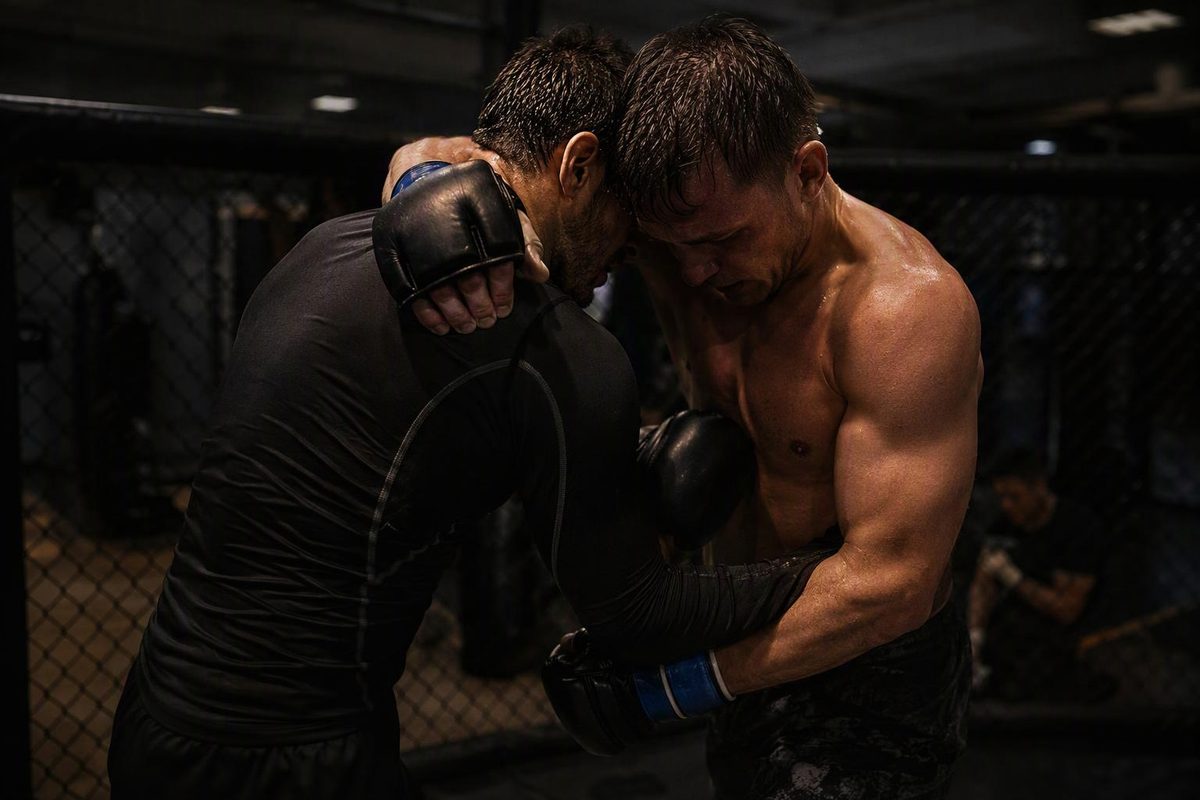
Infighting means fighting at close range, especially with compact punches rather than fully extended straight shots. In boxing, that usually means hooks, uppercuts and the positioning needed to land or defend them. Expert Boxing’s inside-fighting guide describes bent-arm punches as useful when there is little room for straight punches.
For an MMA beginner, the extra challenge is that punching range can become grappling range. Your first goal is not to win a crowded exchange: it is to keep your balance, protect yourself and recognize when to strike, establish control or leave.
Infighting and clinching are related, not identical
You can exchange short punches without holding your partner. A clinch involves grips or body contact used to control their movement. In MMA, that control can support strikes or lead into takedowns; Evolve University’s clinch introduction explains both roles.
That distinction matters when choosing classes. Boxing can teach useful close-range punching, but an MMA class also needs to address the grappling that happens at the same distance. Ask your coach to connect the two rather than assuming that boxing habits transfer unchanged.
Before any partner round, clarify the task: “Are we practicing punches, clinch control, or transitions between them?” Also confirm permitted targets, contact level and whether takedowns are included. Do not treat something seen in a professional fight as permission to use it in class.
Three basics to establish first
1. Keep a usable base
Stay in the stance your coach has taught, with knees comfortably bent and feet positioned so you can move without crossing them. If reaching for a punch makes you stumble, shorten the action and reset.
Close range is not a reason to fold forward at the waist or lean all your weight onto your partner. Have your coach check your posture before adding resistance. If your stance is still unfamiliar, start with the beginner stance setup.
2. Make punches compact—not careless
Practice one hook or uppercut at a time before building combinations. Avoid drawing the hand back to generate momentum, and return it to guard after the punch. Keep your eyes on the target rather than throwing your head backward with an uppercut.
These are explicit coaching points in England Boxing’s coaching handbook, which also warns that overhitting can cost you your base of support. A short punch still needs technique; short travel does not make it harmless.
3. Learn control separately from hitting
Ask your MMA coach to demonstrate a basic clinch position and its release. An underhook, for example, places your arm beneath your partner’s upper arm to help establish control.
Start cooperatively, without strikes or takedowns. Do not improvise neck pulls, head pressure or trips from a written description. A coach needs to see both partners’ posture and adjust the position directly.
A low-contact way to begin
Use this as a session request for your coach, not a substitute for supervised instruction:
- Rehearse without contact. Slowly practice one compact punch, return to guard and take a controlled step out. Pause after each repetition to check balance.
- Move to coach-held pads. Wear properly fitted wraps and suitable gloves in good condition. Use a short hook–uppercut sequence at a comfortable pace. Let the coach set the distance and correct any reaching or winding up.
- Practice the clinch separately. With a suitable partner, establish the taught position, hold it cooperatively and release on cue. Keep strikes and takedowns out of this stage.
- Add a restricted live task only when cleared. Let the coach choose one objective and define the resistance, targets and stopping conditions. Do not jump straight into unrestricted close-range sparring.
Checkpoint: Can you finish the action balanced, recover your guard and stop immediately on cue? If not, simplify the drill rather than increasing speed or contact.
Keep it compatible with your workweek
After warming up, put technical close-range practice before exhausting conditioning, not after it. England Boxing’s handbook treats technique sparring as a controlled learning experience, recommends suitable partner matching and says sparring should stop when fatigue sets in. It also recommends wraps and appropriate gloves for punching pads. Those are useful standards to look for in an MMA gym, not a universal MMA equipment rulebook.
A coach who separates drills from fighting, corrects posture and enforces agreed limits is giving you something observable to assess. A partner who repeatedly ignores those limits is a reason to stop the round and involve the coach—not to hit harder in return.