
How to Throw a Right Hook in Orthodox or Southpaw Stance
Learn right-hook mechanics, how the punch changes between orthodox and southpaw, and a controlled practice progression for beginner MMA training.
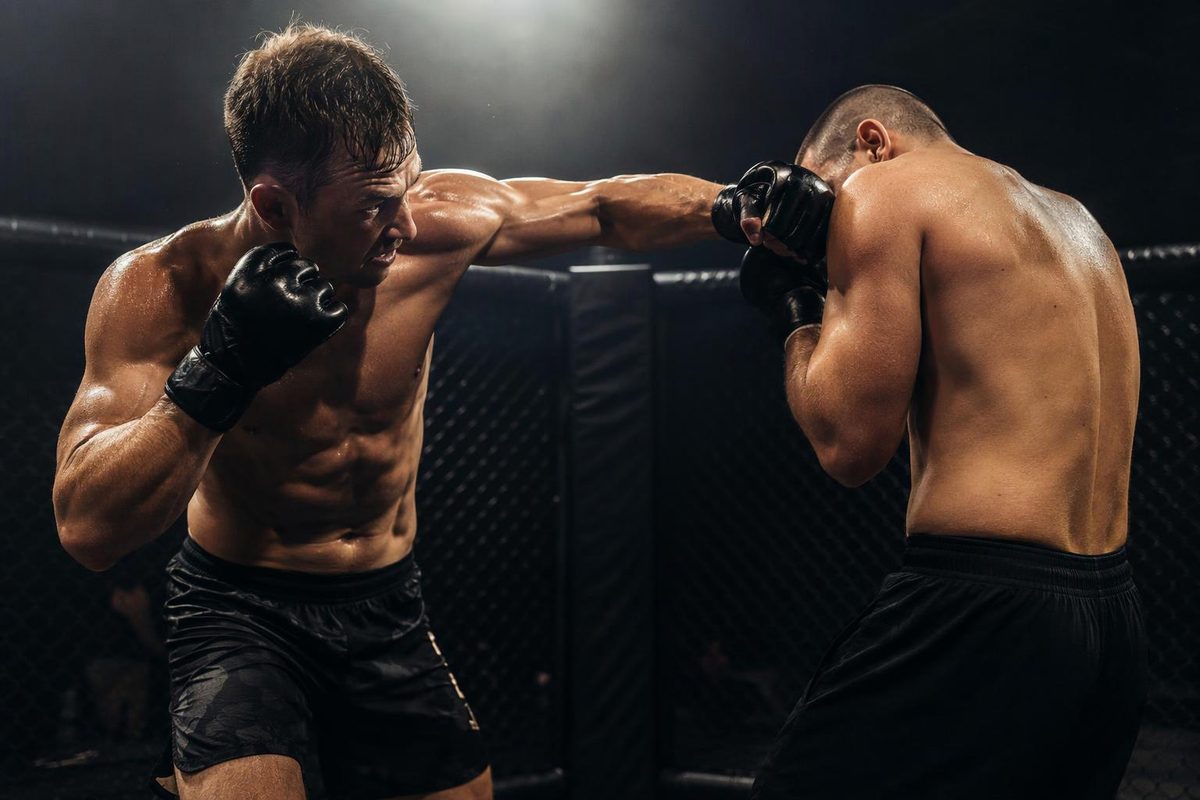
A right hook is a curved punch thrown with your right hand, not a straight right and not a wide arm swing. In orthodox stance it is your rear-hand hook; in southpaw it is your lead-hand hook. For the beginner version below, that changes which foot drives the punch and how your weight shifts.
Start with a compact, head-height hook in shadowboxing, then have a coach check it before adding impact. You do not need sparring to begin learning it.
Which right hook are you throwing?
| Your stance | Foot in front | Right hand’s role |
|---|---|---|
| Orthodox | Left | Rear hook, starting farther from the target |
| Southpaw | Right | Lead hook, starting closer to the target |
“Lead hook” does not automatically mean left hook. If you need help setting your right-side lead, see the southpaw stance guide.
For this beginner version, work close enough to reach the target with a bent arm without leaning. The AIBA coaching manual treats hooks primarily as medium-distance punches and teaches stationary punches before adding steps.
How to throw the right hook
1. Set your base and guard
Keep your feet staggered, knees slightly bent, chin down and eyes on the target. Start with both hands up. Your left hand stays beside your chin while the right punches.
Do not pull your right glove backward to wind up. Begin from your normal guard.
2. Use the correct foot and body rotation
Orthodox: rear right hook. Turn your right hip and shoulder toward the target, allowing the right rear foot to turn naturally with the movement. Let your weight move toward the left lead leg without lunging over it. Your arm follows the rotation rather than swinging independently. AlphaBox’s rear-hook instruction emphasizes this rear-side rotation, a compact arc and avoiding overrotation; the AIBA manual teaches a weight shift toward the lead leg.
Southpaw: lead right hook. Drive through the right front foot, letting its heel lift and the foot turn with your hips. Rotate the torso to carry the bent right arm across, with weight moving toward the left rear leg. Do not rock so far backward that you lose your stance. These are the lead-hook principles described in the England Boxing coaching handbook, applied to a right-side lead.
The foot turn supports the punch; it is not a separate, exaggerated spin.
3. Keep the arm bent and the wrist straight
For this head-height drill, bring the elbow roughly to shoulder height and keep it bent near 90 degrees. Treat that as a starting cue, not an exact angle to force at every distance.
Bring the knuckle surface toward the target, not the inside of the glove. Have your coach check your fist orientation and contact point before bag work. The AIBA manual’s hook instructions specify a bent arm, target-facing knuckles and quick retraction; England Boxing also emphasizes keeping the wrist straight.
4. Return to guard—even when you miss
Bring the right hand quickly back to its defensive position by the shortest practical path and recover your balanced stance. Do not let the punch drag your shoulder around until your back faces the target.
Checkpoint: throw one slow hook into the air, then take a small step backward. If you need a stumble or an extra hop first, reduce the rotation and reach.
Fix these mistakes before adding power
- The hook becomes a long swing: move into suitable range and shorten the arc. Do not straighten the arm just to reach.
- Only the arm moves: slow down and connect the foot turn, hip rotation and shoulder movement.
- The left hand drops: practice single hooks with a deliberate guard reset after each repetition.
- You spin when the punch misses: rehearse misses in shadowboxing. A bag should not be what stops your rotation.
A short practice progression
Use this as a technical add-on after your usual warm-up, not an exhausting extra workout.
- Shadowbox five single right hooks. Reset fully between repetitions. Check the left hand, wrist and balance. Repeat once if the movements remain controlled.
- Add an exit. Throw one hook, return to guard and take a small backward step: move the rear foot first, then let the front foot follow. Keep your feet staggered. This follows the backward-step sequence in the AIBA manual.
- Move to coach-held pads or a bag. Use wraps and suitable training gloves, with your coach checking the fit and wrapping. Begin with light single contacts. Stop if your hand or wrist hurts; do not try to fix painful contact by hitting harder. England Boxing’s hand-protection guidance calls for correct wrapping and appropriate gloves when hitting pads or equipment.
- Add one setup once singles are clean. In orthodox, try a left jab followed by a right rear hook, checking that you are close enough. In southpaw, try a left cross followed by a right lead hook. Keep both punches light and reset rather than chasing speed.
For MMA, ask your coach to check the hook within your MMA stance, then connect it to the defense or exit being taught in class. Keep initial partner work to agreed, coach-led drills without head impact; learning the motion is not permission to test its power on a teammate.